How Much Water Should You Drink Every Day? A Complete Guide by Age, Gender, and Body Weight
Learn how much water you should drink daily based on age, gender, and body weight. Explore recommended water intake charts, hydration tips, signs of dehydration, and expert guidance for maintaining optimal health.
LIFESTYLE
Created By: LSG
7/7/20264 min read


How Much Water Should You Drink Every Day? A Complete Guide by Age, Gender, and Body Weight
Water is the foundation of life. Every cell, tissue, and organ in the human body depends on it to function properly. Despite its importance, one of the most common health questions remains: How much water should you drink every day?
Many people have heard the "8 glasses a day" rule, but the truth is that there is no universal amount that suits everyone. Your daily water requirement depends on several factors, including your age, gender, body weight, activity level, climate, diet, and overall health.
This comprehensive guide explains how much water you need based on scientific recommendations and practical guidelines.
Why Water Is Essential?
The human body is made up of approximately 50–70% water, depending on age, sex, and body composition. Water performs hundreds of vital functions, including:
Regulating body temperature
Transporting nutrients and oxygen
Removing waste through urine and sweat
Lubricating joints
Supporting digestion
Maintaining blood pressure
Protecting organs and tissues
Keeping skin healthy
Supporting brain function and concentration
Even mild dehydration can reduce physical performance, affect mood, and impair concentration.
Factors That Affect Daily Water Needs
No two people require exactly the same amount of water. Daily fluid requirements vary depending on:
1. Age
Children, adults, and older adults all have different hydration needs because of differences in metabolism and body composition.
2. Gender
Men generally require more water than women because they usually have more lean muscle mass, which contains a higher percentage of water.
3. Body Weight
Larger individuals typically require more water because they have more body tissue to support.
4. Physical Activity
Exercise increases water loss through sweat. The more active you are, the more fluids you need.
5. Climate
Hot and humid environments increase sweating, leading to greater water loss.
6. Diet
Foods rich in salt, sugar, or protein increase water requirements, while fruits and vegetables contribute water to your daily intake.
7. Health Conditions
Fever, vomiting, diarrhea, kidney stones, urinary infections, pregnancy, and breastfeeding all increase fluid requirements.
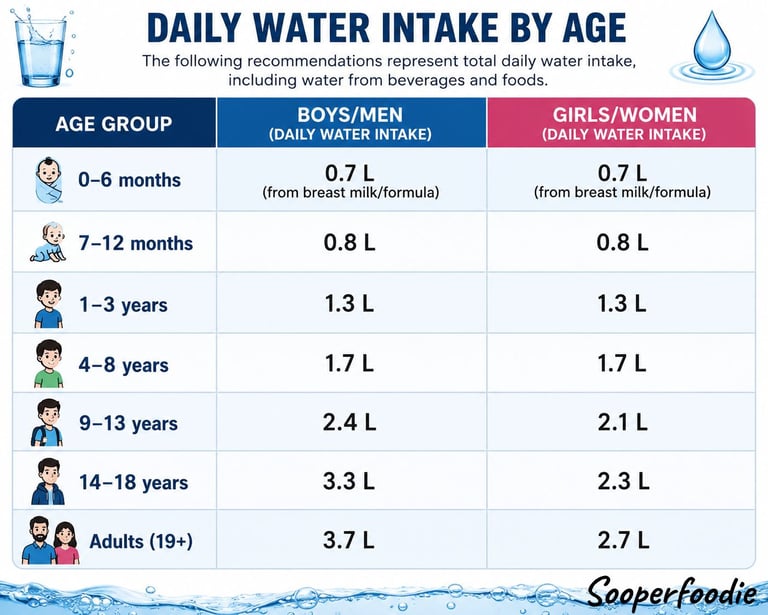
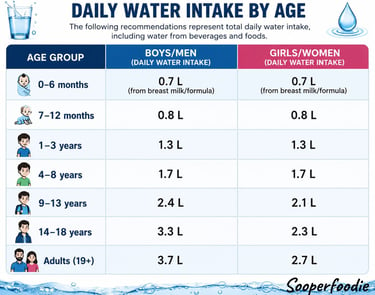
Daily Water Intake by Age
The following recommendations represent **total daily water intake**, including water from beverages and foods.
Remember that around 20–30% of this water typically comes from foods such as fruits, vegetables, soups, yogurt, and milk.
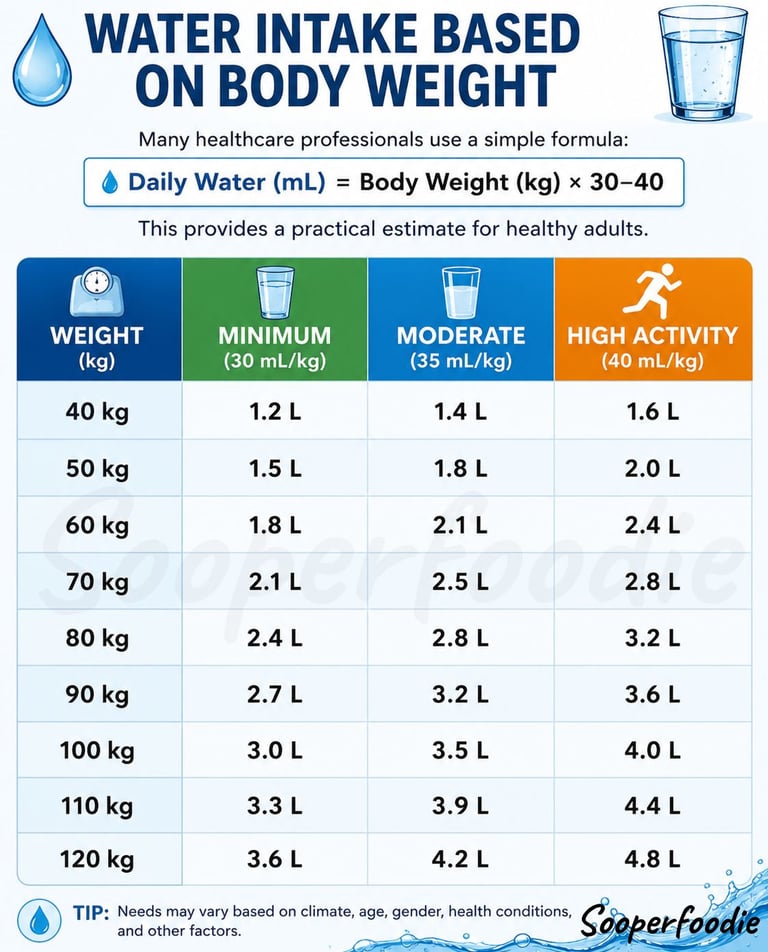
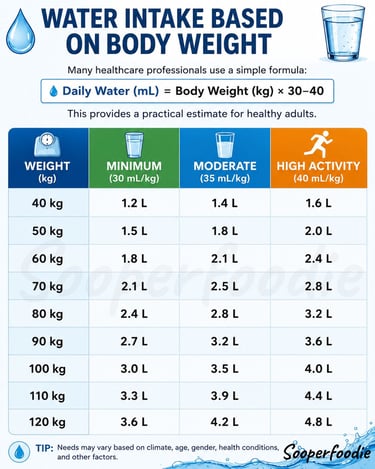
Water-Intake Based on Body Weight
Water Requirements by Gender
Adult Men
Average recommended total water intake:
3.7 liters per day
This includes:
Drinking water
Tea
Coffee
Milk
Juice
Water contained in foods
Men who perform physically demanding jobs or participate in sports often require significantly more.
Adult Women
Average recommended total water intake:
2.7 liters per day
Women's hydration needs increase during pregnancy and breastfeeding.
Pregnancy
Recommended total water intake:
Approximately 3.0 liters/day
Breastfeeding
Recommended total water intake:
Approximately 3.8 liters/day
How Exercise Changes Water Needs
During exercise, the body loses water through sweat.
General recommendations:
Light exercise (30 minutes): add about 250–500 mL
Moderate exercise (1 hour): add about 500–800 mL
Intense exercise: add 750–1,000+ mL per hour depending on sweat loss
Athletes should replace fluids gradually before, during, and after exercise.
Water Needs in Hot Weather
High temperatures increase sweating dramatically.
Consider adding:
500 mL for mild heat exposure
1–2 liters or more during prolonged outdoor work or sports
Workers in construction, farming, factories, and outdoor occupations may need substantially more fluids.
Foods That Help You Stay Hydrated
Water doesn't only come from beverages.
Many foods contain high amounts of water.
Fruits
Watermelon
Strawberries
Oranges
Grapes
Pineapple
Vegetables
Cucumber
Lettuce
Celery
Tomatoes
Zucchini
Other Sources
Soup
Yogurt
Milk
Coconut water
These foods can contribute significantly to your daily hydration.
Signs of Dehydration
Common symptoms include:
Thirst
Dry mouth
Dark yellow urine
Headache
Fatigue
Dizziness
Muscle cramps
Dry skin
Reduced concentration
Severe dehydration may cause confusion, rapid heartbeat, low blood pressure, or fainting and requires prompt medical attention.
Can You Drink Too Much Water?
Drinking excessive amounts of water in a short period can dilute sodium levels in the blood, leading to hyponatremia, a potentially dangerous condition.
Symptoms include:
Nausea
Vomiting
Confusion
Swelling
Headache
Seizures in severe cases
Healthy kidneys can process large amounts of water over time, but it's generally better to drink steadily throughout the day rather than consuming several liters all at once.
Practical Tips to Stay Hydrated
Start your day with a glass of water.
Carry a reusable water bottle.
Drink before you feel very thirsty.
Increase water intake during hot weather.
Drink extra fluids when exercising.
Eat fruits and vegetables with high water content.
Limit excessive alcohol intake.
Balance caffeinated beverages with water if your overall fluid intake is low.
Frequently Asked Questions
Is drinking 8 glasses of water enough?
For some people, yes. For many others, especially larger or more active individuals, it may not be enough. Your hydration needs depend on your body size, environment, and lifestyle.
Does tea and coffee count?
Yes. Tea, coffee, milk, and other beverages contribute to your total daily water intake. While caffeine has a mild diuretic effect, moderate consumption still provides hydration.
How can I tell if I'm drinking enough water?
A simple indicator is urine color. Pale yellow urine generally suggests adequate hydration, although certain foods, vitamins, and medications can also affect urine color.
Should everyone follow the body-weight formula?
The 30–40 mL/kg guideline is a practical estimate for healthy adults. Individual needs can differ based on climate, activity level, pregnancy, breastfeeding, or medical conditions.
Key Takeaways
There is no one-size-fits-all recommendation for water intake.
Adult men generally need around 3.7 liters of total water per day.
Adult women generally need around 2.7 liters of total water per day.
A practical guideline for healthy adults is 30–40 mL of water per kilogram of body weight each day.
Children require less water than adults, but their needs increase steadily with age.
Exercise, hot weather, illness, pregnancy, and breastfeeding all increase water requirements.
Staying hydrated supports energy, digestion, circulation, kidney function, and overall health.
Listening to your body's thirst signals, monitoring your urine color, and adjusting your fluid intake based on your daily activities are practical ways to maintain healthy hydration. While general recommendations provide a useful starting point, your ideal water intake is the amount that keeps you well-hydrated without overconsumption.